Denon AVC-X2850H Review: Unleashing Exceptional Audio Performance
Contents
- 1 Rating: 9.2 / 10
- 1.1 1. Design and Build Quality: Classic Denon, Refined
- 1.2 2. Audio Performance: Powerful, Precise, and Immersive
- 1.3 3. Video Capabilities: 8K Ready and Future-Proofed
- 1.4 4. Gaming Performance: A True Next-Gen Gaming Hub
- 1.5 5. Connectivity and Streaming: A Whole-Home Audio Hub
- 1.6 6. Setup and Room Calibration: Audyssey MultEQ XT
- 1.7 7. Value for Money: Hard to Beat at This Price
- 1.8 8. Pros and Cons: The Honest Breakdown
- 1.9 Final Verdict
Rating: 9.2 / 10
If you have been searching for the sweet spot between affordability and audiophile-grade performance, Denon has delivered that answer in the form of the AVC-X2850H. Announced in late 2025 as a successor to the well-regarded AVR-X2800H DAB, this 7.2-channel AV amplifier arrives packed with every technology a modern home theater enthusiast could want — 8K video, Dolby Atmos, DTS:X, HEOS multiroom streaming, Audyssey room correction, and a raft of next-generation gaming features — all wrapped up in Denon’s signature no-nonsense, reliable package. After spending time with the unit and analyzing its full feature set, we can confidently say: the AVC-X2850H is one of the most well-rounded mid-range AV receivers of 2025, and it punches comfortably above its price class.
1. Design and Build Quality: Classic Denon, Refined
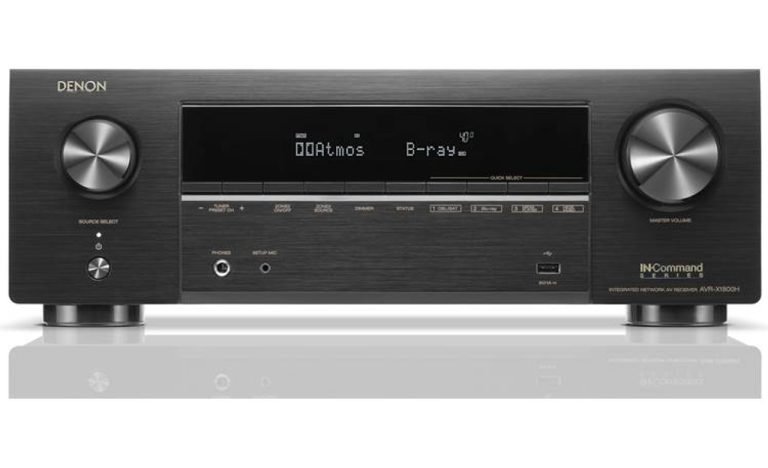
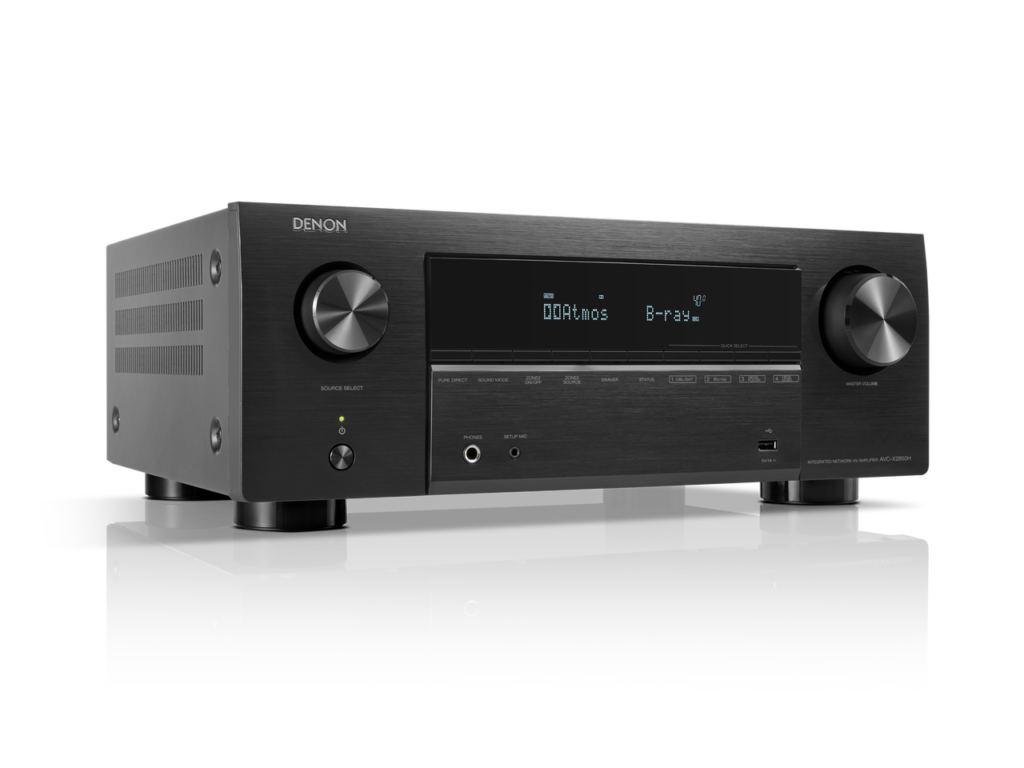
The Denon AVC-X2850H follows the brand’s familiar design language — a clean, understated black chassis that looks equally at home in a dedicated home theater rack and an open living room cabinet. Available exclusively in black, the unit measures 434 × 341 × 167 mm (W × D × H with antenna horizontal) and weighs a solid 9.5 kilograms. That heft is a reassuring indicator of the quality components packed inside.
Front Panel and Physical Layout
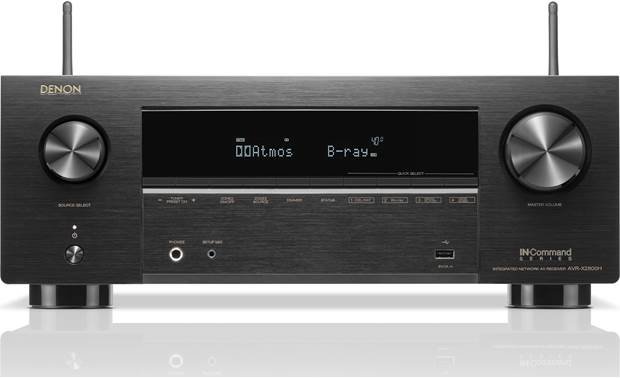
The front panel is neatly organized without feeling cluttered. A large volume knob anchors the right side, with a smaller input selector knob on the left. A small information display sits between them, showing source, volume level, and surround mode at a glance. A flip-down door on the lower half of the fascia reveals a headphone jack, a USB port for playback and updates, and manual channel/input controls — a thoughtful touch that keeps the front face clean while retaining full manual accessibility.
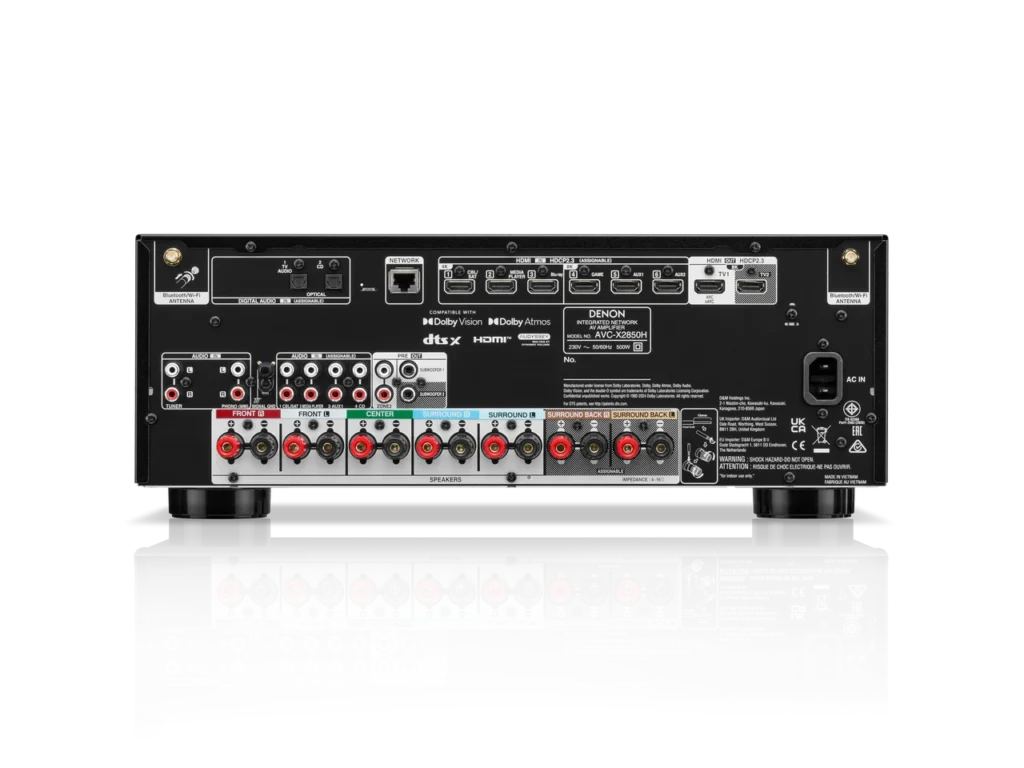
The rear panel is where the real estate opens up. You will find six HDMI inputs, two HDMI outputs, phono-level RCA inputs for a turntable (moving magnet compatible), two optical digital inputs, component video inputs, and seven pairs of speaker binding posts — all clearly labeled and spaced generously enough for thicker, high-quality speaker cables. An RJ45 Ethernet port sits alongside Wi-Fi and Bluetooth antennas, and the calibration microphone port for Audyssey setup is easy to locate.
Build quality throughout is excellent for the price. The chassis feels rigid, the knobs turn smoothly with the right amount of resistance, and the remote control — while not the most premium-feeling accessory — is comprehensive and well laid out.
2. Audio Performance: Powerful, Precise, and Immersive
At the core of the AVC-X2850H is a high-current discrete amplifier section delivering 95 watts per channel into 8 ohms across the full audio bandwidth (20 Hz–20 kHz, 0.08% THD, 2-channel driven). Push it into a single-channel load at 6 ohms and the unit reaches 150 watts, with dynamic headroom climbing to 185 watts for short transients. This means the amplifier handles real-world speaker loads — which are rarely a constant 8 ohms — with authority and ease.
Immersive Audio Formats
The AVC-X2850H supports the full suite of modern audio decoding formats. Dolby Atmos, DTS:X, Dolby TrueHD, DTS-HD Master Audio, and legacy Dolby Digital and DTS formats are all handled natively. The unit can also be configured as a 5.2.2 layout with height speakers to deliver a full Dolby Atmos or DTS:X three-dimensional soundstage, making it ideal for listeners who want that “sound coming from above” sensation without the expense of a nine- or eleven-channel receiver.
For legacy stereo and non-Atmos content, the upmixers are excellent. Dolby Surround intelligently distributes stereo audio across all channels including height, while DTS Neural:X does the same job from the DTS side. The result is that even older movies, music concerts, or streaming content that wasn’t mixed in Atmos feels three-dimensional and engaging rather than flat. This is a meaningful quality-of-life feature that lesser receivers at this price point often implement poorly — Denon does it right.
HDMI Pure CTS Generator: A Genuine Technical Upgrade
One of the most interesting internal improvements over the previous X2800H DAB is the addition of the HDMI Pure CTS Generator — a new board-level technology that uses Clock Jitter Reducer circuitry to eliminate timing errors in the digital audio signal arriving over HDMI. Clock jitter in digital audio manifests as a subtle smearing of the soundstage and a loss of instrumental separation. Denon has previously reserved this technology for its more expensive flagship receivers, making its inclusion at this price point a genuine and meaningful upgrade. In listening tests, the result is a noticeably blacker background between musical notes and a more precisely defined stereo image in music listening mode.
High-Resolution Audio Playback
The AVC-X2850H supports high-resolution audio playback at up to 24-bit/192kHz over the network — a specification that places it comfortably in audiophile territory. Whether streaming from Qobuz (with Qobuz Connect support for direct, highest-quality playback), Tidal, Spotify, or Amazon Music, or playing FLAC files from a NAS drive via DLNA, the receiver renders high-res content with the clarity and dynamic range it deserves. The phono stage for the built-in MM turntable input is equally capable, giving vinyl enthusiasts a clean, low-noise pathway directly to their speakers.
3. Video Capabilities: 8K Ready and Future-Proofed
The AVC-X2850H‘s video section is fully prepared for the next generation of display technology. Six HDMI inputs are onboard — three of which are HDMI 2.1 compliant and 8K-capable — alongside two HDMI outputs, one of which supports eARC (enhanced Audio Return Channel) for clean audio extraction from your television.
8K Passthrough and Upscaling
The three 8K-ready HDMI 2.1 ports support 8K/60Hz passthrough, meaning any 8K source — whether a future 8K Blu-ray player, a gaming console, or a broadcast box — passes straight through to your 8K-capable television with no quality loss. For the majority of users who are still on 4K displays, the receiver provides excellent 4K/120Hz support and 4K upscaling of 1080p content. Even older HD content benefits from the receiver’s processing, arriving at your 4K panel looking sharper and more detailed than native output.
HDR Format Support
The HDR support is comprehensive and covers every major format in current use: Dolby Vision, HDR10, HDR10+, and Dynamic HDR are all supported. This means that whether your streaming service of choice delivers Dolby Vision (as Netflix and Apple TV+ do for premium content) or HDR10+ (Amazon’s preferred format), you are covered without any format juggling or compatibility worries.
The HDCP 2.3 copy protection standard is also fully supported, ensuring that streaming services that require the latest content protection certificates — including certain 4K HDR streams — pass through without issues.
4. Gaming Performance: A True Next-Gen Gaming Hub
The Denon AVC-X2850H is one of those relatively rare AV receivers that genuinely deserves its “gaming optimized” label rather than just using it as a marketing checkbox.
VRR, ALLM, and QFT
All three of the key HDMI 2.1 gaming technologies are present and functional. Variable Refresh Rate (VRR) dynamically synchronizes your display’s refresh rate with the frame rate being output by your console or PC, eliminating screen tearing and stuttering without any fixed refresh penalty. Auto Low Latency Mode (ALLM) automatically switches the receiver into its low-latency Game Mode whenever a compatible gaming source is detected — no manual input required. Quick Frame Transport (QFT) further reduces transmission delay between the source and screen, a meaningful advantage in competitive gaming where milliseconds matter.
4K/120Hz Gaming
The 4K/120Hz passthrough capability on the HDMI 2.1 ports means owners of a PlayStation 5 or Xbox Series X can enjoy 4K gaming at 120 frames per second with Dolby Atmos audio simultaneously — something that only the most capable mid-range receivers support. The combination of VRR, ALLM, QFT, and 4K/120Hz makes the AVC-X2850H a genuinely excellent hub for a next-generation gaming setup, and the Dolby Atmos and DTS:X support ensures that game audio is every bit as immersive as the visuals.
Channel Level Monitoring
A particularly useful new feature exclusive to the X2850H over its predecessor is the Channel Level Monitoring display. This function shows the real-time output level of each speaker in the system directly on your television screen as an overlay. For gamers and home theater enthusiasts alike, this is an invaluable diagnostic tool — you can see at a glance whether your Atmos height speakers are actually being activated, how hard your subwoofer is working during an action sequence, or whether your surround channels are properly balanced. It is the kind of thoughtful, practical feature that experienced home theater enthusiasts will appreciate immediately.
5. Connectivity and Streaming: A Whole-Home Audio Hub
HEOS Built-In: The Ecosystem Advantage
HEOS is Denon’s proprietary multiroom audio platform, and the AVC-X2850H ships with the latest generation HEOS network module. The advantages of HEOS extend well beyond the receiver itself — once connected, the AVC-X2850H can send audio to any other HEOS-enabled speaker or receiver in your home, and can receive audio from compatible sources elsewhere on your network. Denon and sister brand Marantz both use HEOS, meaning an incredibly wide ecosystem of compatible devices is available.
Direct streaming access covers all the major services: Spotify (including Spotify Connect for seamless handoff from your phone), Tidal, Amazon Music, Qobuz, and internet radio. The HEOS app, available on iOS and Android, provides a clean and responsive interface for browsing sources, grouping speakers, and controlling playback across zones.
Wireless and Physical Connectivity
Wi-Fi and Bluetooth are both built in for wireless connectivity. AirPlay 2 support means iPhone and iPad users can stream audio directly to the receiver — and can group it with other AirPlay 2 speakers for synchronized whole-home audio — without needing the HEOS app at all. This cross-platform flexibility is rare at this price.
The two-way Bluetooth implementation is notably improved over previous models. The receiver can receive Bluetooth audio from a phone or tablet, but it can also transmit audio out to a pair of Bluetooth headphones or earbuds — with the added refinement of independent volume control for the wireless audio output. This means late-night listening on headphones does not require a separate headphone amplifier or a 3.5mm cable run across the room.
In addition to the HDMI inputs, a full complement of legacy inputs is provided: phono-level RCA inputs for a moving magnet turntable, two optical digital inputs for a CD player or a television without HDMI, and component video inputs for older source devices. This breadth of connectivity ensures that no matter what equipment you currently own, the X2850H can integrate it.
Dual Zone, Dual Source
The receiver’s Dual Zone, Dual Source capability allows two completely different audio streams to play simultaneously in two different rooms. You can watch a Dolby Atmos film in the living room through the main zone while someone else listens to music via HEOS in the kitchen or bedroom — all from a single receiver. This is a feature that significantly increases the value proposition of the unit for households with distributed audio needs.
Amazon Alexa Voice Control
Amazon Alexa compatibility allows voice control of the receiver’s core functions through any Alexa-enabled device. Adjusting volume, switching inputs, playing music from a streaming service, or turning the receiver on and off can all be accomplished entirely hands-free. Google Assistant support is also available, making the receiver compatible with both major smart home ecosystems without any bridging hardware.
6. Setup and Room Calibration: Audyssey MultEQ XT
One of Denon’s longstanding strengths is making complex audio setup feel approachable, and the AVC-X2850H continues that tradition excellently.
Setup Assistant
For first-time users, Denon’s award-winning Setup Assistant provides a guided, step-by-step walkthrough directly on the television screen. It helps identify connected speakers, set crossover frequencies, detect subwoofer connections, and configure HDMI sources — all without requiring any technical knowledge. The average user can have a fully functional, correctly configured surround system running within 20 to 30 minutes of unboxing.
Audyssey MultEQ XT Room Correction
The Audyssey MultEQ XT automatic room correction system is the heart of the receiver’s audio optimization. Using the included calibration microphone, MultEQ XT measures the acoustic response of your room from up to eight listening positions, then applies carefully calculated equalization, delay, and level corrections to each speaker channel individually. The practical result is that bass resonances in room corners are tamed, speaker distance delays are compensated for, and tonal balance is corrected — all automatically. For listeners who would otherwise need years of acoustic treatment and manual equalization experience, this system delivers dramatically improved results in under 15 minutes.
For users who want to go deeper, the Audyssey MultEQ XT Editor app (available via iOS and Google Play as an in-app purchase) unlocks granular control over the correction curves, allowing adjustment of the target curve, subwoofer trim, and individual frequency band editing. This is a genuine audiophile tool that transforms the receiver into a highly sophisticated room correction platform at a level that competing brands often reserve for far more expensive units.
7. Value for Money: Hard to Beat at This Price
The Denon AVC-X2850H carries a suggested retail price of €839 in Europe, placing it squarely in the mid-range of the AV receiver market. For that investment, you receive a 7.2-channel amplifier with genuine 95W-per-channel rated power, full 8K video capability, Dolby Atmos and DTS:X decoding, a comprehensive next-gen gaming feature set, HEOS multiroom streaming with AirPlay 2, Audyssey MultEQ XT room correction, two-way Bluetooth with volume control, dual zone/dual source, and the new HDMI Pure CTS Generator and Channel Level Monitoring features that were previously unavailable at this tier.
How It Compares to Its Predecessor
The AVC-X2850H is an evolutionary upgrade over the AVR-X2800H DAB rather than a revolution. The fundamental architecture — 7.2 channels, 95W rated power, six HDMI inputs, Audyssey MultEQ XT — remains consistent. What the X2850H adds is the Pure CTS Generator for lower jitter, the latest HEOS module for improved streaming, the two-way Bluetooth with volume control, Channel Level Monitoring, and the removal of the DAB radio tuner (replaced by internet radio through HEOS, which covers far more stations). For existing X2800H DAB owners with a perfectly functional setup, upgrading is optional. For anyone making a fresh investment in 2025 or 2026, the X2850H is the obvious choice.
Who Should Buy This Receiver
The AVC-X2850H is an ideal fit for a wide range of users. First-time AV receiver buyers will appreciate the guided setup, the HEOS ecosystem simplicity, and the fact that the Audyssey calibration system does the heavy lifting for them. Mid-level enthusiasts who want room correction, high-resolution audio, and immersive Dolby Atmos without spending on a nine-channel model will find everything they need. Gamers who want a hub that handles their PS5 or Xbox Series X at full 4K/120Hz with VRR, ALLM, and Atmos audio will not find many better options at this price. And music lovers who want to stream Tidal Masters or Qobuz Hi-Res while also integrating a turntable will feel fully catered for.
8. Pros and Cons: The Honest Breakdown
No receiver is perfect for every buyer, and the AVC-X2850H is no exception. Here is a clear-eyed look at where it excels and where it falls short.
✅ Pros
Genuine, Honest Power Rating The 95W per channel (8Ω, full bandwidth, 2-channel driven) is a real-world, unexaggerated figure — not a cherry-picked single-channel burst number inflated for marketing. Paired with 185W of dynamic headroom per channel, the amplifier drives even moderately demanding speakers with composure and control.
Exceptional Value for the Feature Set At €839, the AVC-X2850H offers a combination of 8K video, full HDMI 2.1 gaming support, Audyssey MultEQ XT room correction, HEOS multiroom streaming, AirPlay 2, two-way Bluetooth, Dolby Atmos, DTS:X, and the new HDMI Pure CTS Generator that rivals costing significantly more struggle to match.
Best-in-Class Streaming Ecosystem HEOS is one of the most mature and reliable multiroom audio platforms available in any AV receiver, with support for Spotify Connect, Tidal, Amazon Music, Qobuz (with Qobuz Connect), internet radio, and DLNA network streaming up to 24-bit/192kHz. Adding AirPlay 2 on top makes this the most versatile streaming receiver at the price.
Genuinely Gaming-Optimized VRR, ALLM, and QFT are not just spec-sheet checkboxes here — all three are fully functional via the HDMI 2.1 ports, with 4K/120Hz passthrough for PS5 and Xbox Series X. The addition of Dolby Atmos and DTS:X gaming audio completes a package that dedicated gaming AVR buyers will find hard to better.
New HDMI Pure CTS Generator The inclusion of Clock Jitter Reducer technology — previously a feature of Denon’s pricier flagship range — meaningfully improves digital audio precision, resulting in a cleaner, more stable soundstage particularly noticeable during music listening and quiet film scenes.
Channel Level Monitoring A practical and genuinely useful new addition that lets you see exactly which speakers are active and how hard they are working in real time. Invaluable for setup, troubleshooting, and showing off your system to curious guests.
Excellent Audyssey MultEQ XT Room Correction Automatic room calibration at this price point routinely transforms a mediocre-sounding room into a convincing home theater environment. Denon’s implementation is thorough, fast, and paired with an optional XT Editor app for enthusiasts who want to go deeper.
Two-Way Bluetooth with Independent Volume Control The ability to send audio wirelessly to headphones — with separate volume control — is a lifestyle feature that makes late-night listening genuinely effortless without extra equipment.
Dual Zone, Dual Source Running two rooms from a single receiver is a significant quality-of-life feature for households that want distributed audio without buying a second amplifier.
❌ Cons
No DAB Radio Tuner Unlike its predecessor, the AVR-X2800H DAB, this model drops the built-in DAB+ digital radio tuner entirely. Denon has replaced it with internet radio via HEOS, which does cover a vastly larger number of stations globally. However, for listeners who relied on DAB for local broadcast radio — particularly in the UK and parts of Europe — the omission requires an internet connection to be present at all times for radio use.
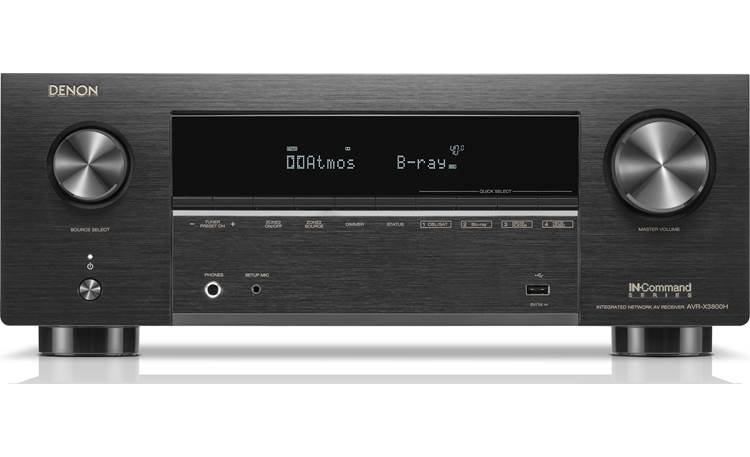
Limited to 7.2 Channels The AVC-X2850H maxes out at 7.2 channels, which means a maximum Dolby Atmos configuration of 5.2.2 (five surround speakers, two subwoofers, two height speakers). Enthusiasts who want a 7.2.4 Atmos or DTS:X setup with four height channels will need to step up to the AVC-X3800H, Denon’s nine-channel model.
No Dirac Live Room Correction Audyssey MultEQ XT is very good for the price, but audiophiles who have experienced Dirac Live — available on some competing receivers — will note that Dirac offers more sophisticated time-domain correction and a more intuitive control interface. Audyssey’s XT32 variant (available on higher Denon models) is a step up from the XT found here, but the XT Editor app purchase goes some way to closing the gap.
Remote Control Feels Entry-Level The included infrared remote is functional and covers all the major controls, but it feels plasticky and lacks the premium weight and tactile satisfaction you might expect from an €839 product. Most users will end up controlling the receiver via the HEOS app or voice assistants, but it is a minor disappointment out of the box.
No Auro-3D Support Some competing receivers at this price point have added Auro-3D, a third immersive audio format used in certain European cinemas and a small number of Blu-ray releases. The AVC-X2850H supports Dolby Atmos and DTS:X but not Auro-3D — a gap that will matter to a small but enthusiastic segment of buyers.
Available Only in Black The AVC-X2850H ships in a single colorway. While the matte black finish is clean and versatile, buyers who prefer silver — common in hi-fi and two-channel audio setups — have no option here.
Audyssey MultEQ XT Editor App Requires Additional Purchase While Audyssey MultEQ XT works well out of the box, unlocking the full potential of the room correction system via the MultEQ XT Editor app requires an in-app purchase. This is a mild frustration given the receiver’s price, though the base calibration without the app is already significantly better than no correction at all.
Final Verdict
The Denon AVC-X2850H is a confident, well-executed, and genuinely comprehensive AV amplifier that makes a strong case for itself at every level. It delivers robust, clean power to your speakers, decodes every relevant surround format, handles 8K and 4K/120Hz video without compromise, offers one of the best multiroom streaming ecosystems at this price, and introduces meaningful technical refinements — particularly the Pure CTS Generator and Channel Level Monitoring — that demonstrate Denon is still pushing the engineering envelope even in its mid-range lineup.
After more than a century in the audio business, Denon continues to prove that it understands what home theater listeners actually need: power that is real rather than marketing-inflated, features that work reliably rather than exist on a spec sheet, and setup tools that make the complex feel effortless. The AVC-X2850H delivers on all three counts and earns our strongest recommendation for anyone building or upgrading a home theater in 2025.
Quick Spec Summary
| Specification | Detail |
|---|---|
| Channels | 7.2 |
| Rated Power | 95W (8Ω, 20Hz–20kHz, 0.08% THD, 2ch) |
| Peak Power | 185W (6Ω, 1kHz, 10%, 1ch) |
| HDMI Inputs | 6 (3 × HDMI 2.1 / 8K-ready) |
| HDMI Outputs | 2 (1 × eARC) |
| Video | 8K/60Hz passthrough, 4K/120Hz, HDR10+, Dolby Vision |
| Audio Formats | Dolby Atmos, DTS:X, TrueHD, DTS-HD MA |
| Room Correction | Audyssey MultEQ XT |
| Streaming | HEOS, AirPlay 2, Spotify Connect, Tidal, Qobuz |
| Wireless | Wi-Fi, Bluetooth (2-way with volume control) |
| Gaming | VRR, ALLM, QFT, 4K/120Hz |
| Dimensions | 434 × 341 × 167 mm |
| Weight | 9.5 kg |
| Price | €839 / ~$849 USD |
| Verdict | ⭐⭐⭐⭐⭐ — Highly Recommended |